
Fat and muscle distribution
The number on the scale does not separate fat from muscle. DXA shows how much of each you have and where it sits.
Tests and assessments
DXA (dual-energy X-ray absorptiometry) precisely measures fat mass, muscle mass and bone density. The scan is done at a partner center and the results are interpreted with your doctor, so the numbers turn into a clear plan.
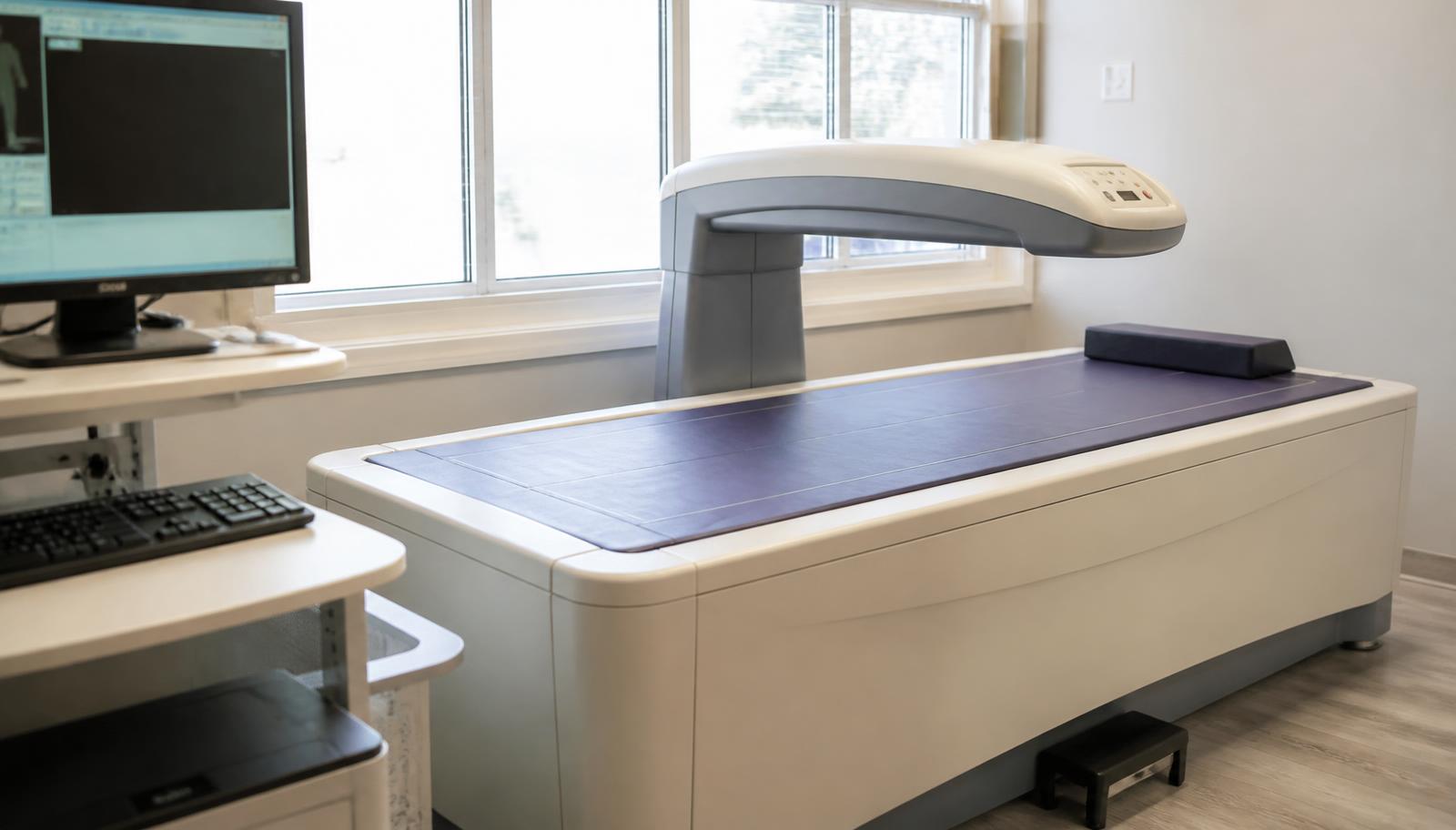
The number on the scale does not separate fat from muscle. DXA shows how much of each you have and where it sits.
Visceral abdominal fat matters more for metabolism than total weight. DXA makes it measurable.
Bone mineral density gives a baseline your doctor can use to assess bone strength and follow change over time.
A repeat scan shows whether weight loss comes from fat or muscle — the most important number when following a program.
1. Doctor’s appointment
We go through your question and health background. The doctor assesses whether DXA is justified for you or other measurements are enough. If the scan is needed, the doctor issues the referral during the visit — we do not refer anyone to the scan without an appointment.
2. Scan at the partner center
The scan itself takes a few minutes, is painless and needs no preparation beyond comfortable clothing.
3. Interpreting the results
The doctor explains what the numbers mean for you and connects them to the next steps — nutrition, training, lab tests.
Where next
Body composition measurement is most useful when it is part of a broader assessment or program.
Book a doctor’s consultation — we review your question and decide together which measurements you actually need.
Book a doctor’s consultation